
Dubai is often associated with speed and scale. How did this city influence the birth of your brand?
— YLA was born precisely within this con-text. In Dubai, manufacturing, design, and ambition naturally coexist. Coming from an industrial background, I found it natural to develop a brand here that does not separate production from emotion. YLA focuses exclusively on metal furniture for interiors, where refined minimalism meets highly controlled industrial processes. My goal has always been to create objects that appear calm and restrained, yet are complex in execution and designed to last, both structurally and emotionally.
Metal is often perceived as a cold and purely functional material. How do you challenge this perception?
— I have never seen metal as a limitation. For me, it is a material with immense expressive potential. The challenge is to move it beyond pure function and allow it to feel conscious and human. Through proportion, finish, and restraint, metal can convey balance, stability, and quiet confidence. In a world often driven by excess, I believe strength lies in precision, control, and durability.
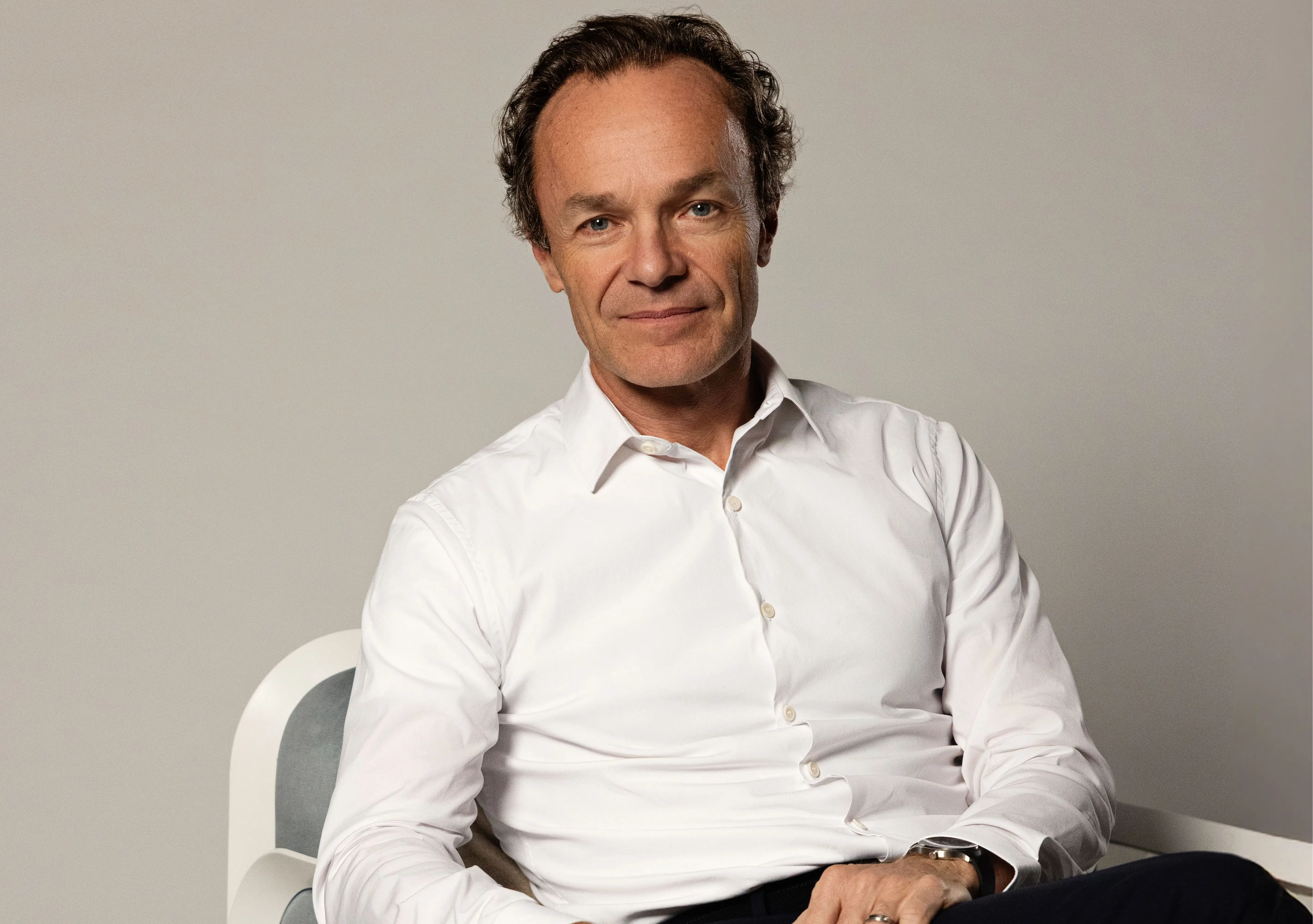
Benoit Rondard Founder of YLA
What role do technical details, such as proportions and finishes, play in your projects?
— Technical details are never neutral. Proportions, tolerances, and surfaces are emotional decisions as much as technical ones. Structure defines how an object stands, but surface defines how it is perceived. Finishes are where industrial precision meets intention: how metal reflects light, absorbs colour, or responds to touch directly shapes the way an object is experienced.
You mentioned using powder coating. Why is this so important for minimalist design?
— Powder coating is not a technical requirement for us, it is a deliberate design choice. It allows us to work with precise, controlled colours and textures inspired by nature. In minimalist design, nothing can be hidden, so consistency becomes essential. When forms are reduced, execution must be flawless. In that sense, consistency is not a detail, it is the design itself.
How important is the reliability of materials and partnerships with companies like Qemtex?
— A high level of design control is only possible when materials and processes are reliable. Partners like Qemtex are fundamental because they provide powder coating solutions that are consistent, durable, and technically dependable. When materials behave predictably over time, it gives me the freedom to focus on design rather than correction. Dubai’s industrial ecosystem plays a key role here, offering access to advanced expertise that allows industry and design to evolve together.
What does contemporary production mean to you in terms of cultural values?
— For me, manufacturing is first and foremost a question of values. Durability is not just a technical feature; it is a form of responsibility. Precision is a sign of respect, both toward the material and toward the people who will live with the object. Today, industry should not be defined only by speed or volume, but by the ability to create things that remain relevant, useful, and meaningful over time. Producing better matters more than producing more.